
Here's a number that should grab your attention: designers who use AI tools now ship projects up to 40% faster than those who don't, according to recent industry surveys. That's not a small bump, that's a whole different way of working. And it's only the beginning of what's coming.
The future of web design isn't some far-off sci-fi fantasy anymore. It's happening right now, in real design studios, freelance workflows, and in-house marketing teams. AI is quietly rewriting the rules of how websites get built, who builds them, and how fast they can go live. If you own a website, sell online, or build sites for a living, this shift affects you directly, whether you've noticed it yet or not.
Key Takeaways
- AI-generated interfaces are speeding up design timelines from weeks to days, sometimes hours.
- Adaptive layouts now adjust automatically based on device, user behavior, and even mood signals.
- Accessibility is becoming a built-in feature, not an afterthought, thanks to AI auditing tools.
- Faster iteration cycles mean businesses can test and improve designs in near real-time.
- Designers aren't disappearing, their roles are shifting toward strategy, curation, and creative direction.
Why the Future of Web Design Depends on Adaptive Layouts
Static websites are starting to feel like flip phones, functional, sure, but clearly behind the times. The next wave of design is all about layouts that bend and flex depending on who's looking at them and how.
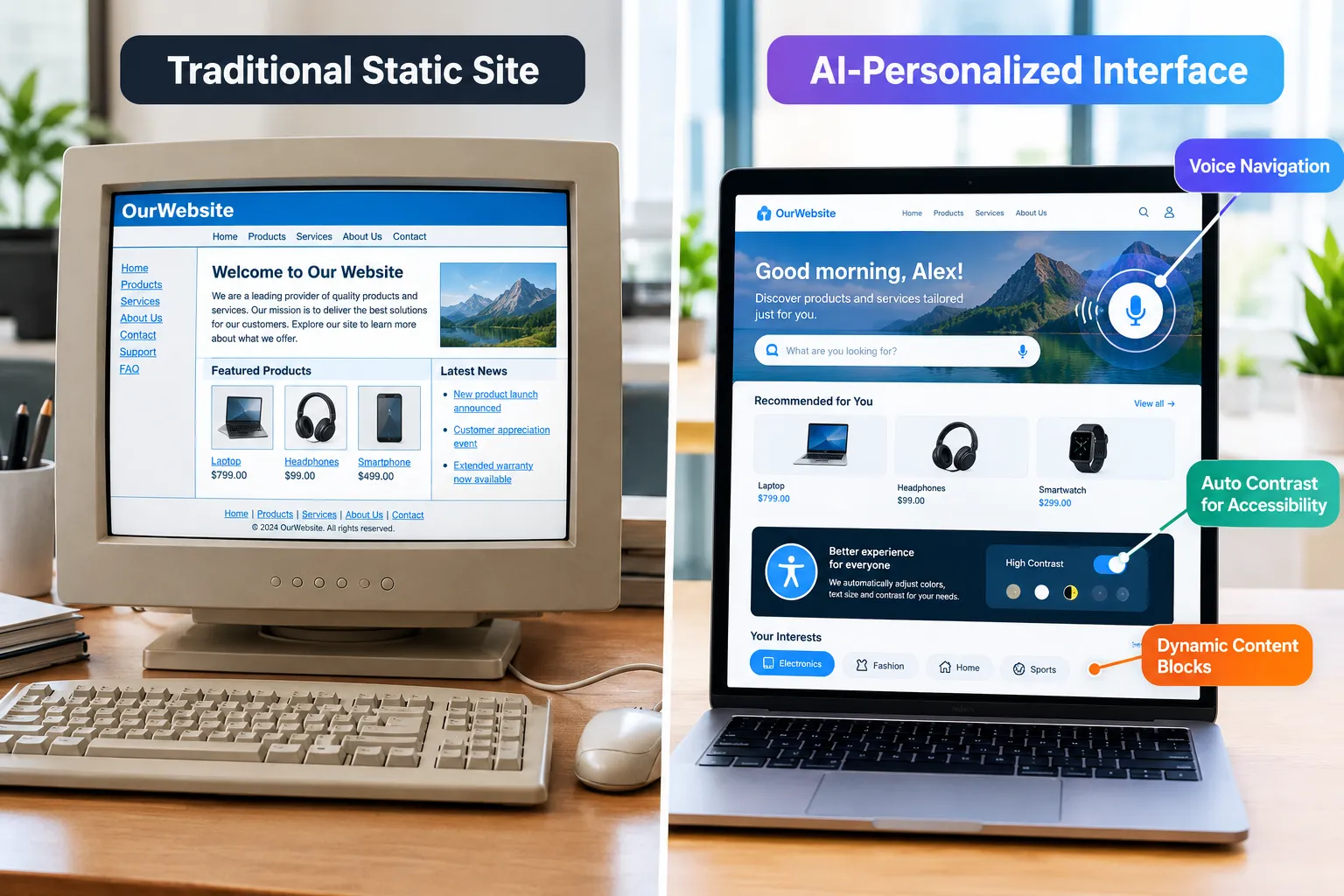
Adaptive design used to mean "responsive", shrinking a layout for mobile screens. Today it means something much smarter. AI systems can now analyze a visitor's device, location, browsing history, even scroll speed, and rearrange content on the fly to match what that specific person is likely to want. A first-time visitor might see a simple welcome tour. A returning customer might land straight on a personalized deals page.
This isn't just cool tech, it's good business. Sites that adapt to user intent see higher engagement and lower bounce rates. For business owners, that translates into more leads and sales without hiring a bigger team.
| Layout Type | How It Works | Best For |
|---|---|---|
| Static | Same layout for everyone | Simple brochure sites |
| Responsive | Adjusts to screen size | General business sites |
| Adaptive AI | Adjusts to user behavior & intent | E-commerce, SaaS, content sites |
"The future of web design isn't about making things look pretty, it's about making things fit the person looking at them."
AI-Generated Interfaces Are Changing Who "Designs" a Website
Not long ago, building a professional website required hiring a designer, a developer, and often a copywriter. Now, AI tools can generate a full homepage layout, colors, fonts, images, and copy suggestions, from a short text prompt. Type "modern bakery website, warm tones, family-owned feel," and within seconds you've got a working draft.
This doesn't mean designers are becoming obsolete. Far from it. What's happening is a shift in what designers spend their time doing. Instead of manually placing every pixel, they're now:
- Reviewing and refining AI-generated drafts
- Making strategic branding decisions
- Focusing on storytelling and user psychology
- Training AI tools on brand-specific style guides
For web developers, this also means faster handoffs. Many AI platforms now generate clean code alongside the visual design, cutting development time significantly.
Accessibility Gets a Serious Upgrade
One of the most underrated parts of the future of web design is how AI is improving accessibility, and it's a big deal. Nearly 1 in 4 adults in the U.S. lives with some type of disability, yet a huge share of websites still fail basic accessibility standards.
AI-powered design tools now automatically:
- Flag low-contrast text and color combinations
- Suggest alt text for images
- Adjust font sizing and spacing for readability
- Test navigation flow for screen readers
This is huge for business owners too, since accessibility lawsuits have been climbing steadily. Building accessible sites from the start isn't just ethical, it's smart risk management.
How Faster Design Iteration Is Reshaping Timelines
Remember when a website redesign took three to six months? Those days are fading fast. AI tools now let teams generate multiple design variations in minutes, test them with real users, and refine based on actual data, not guesswork.
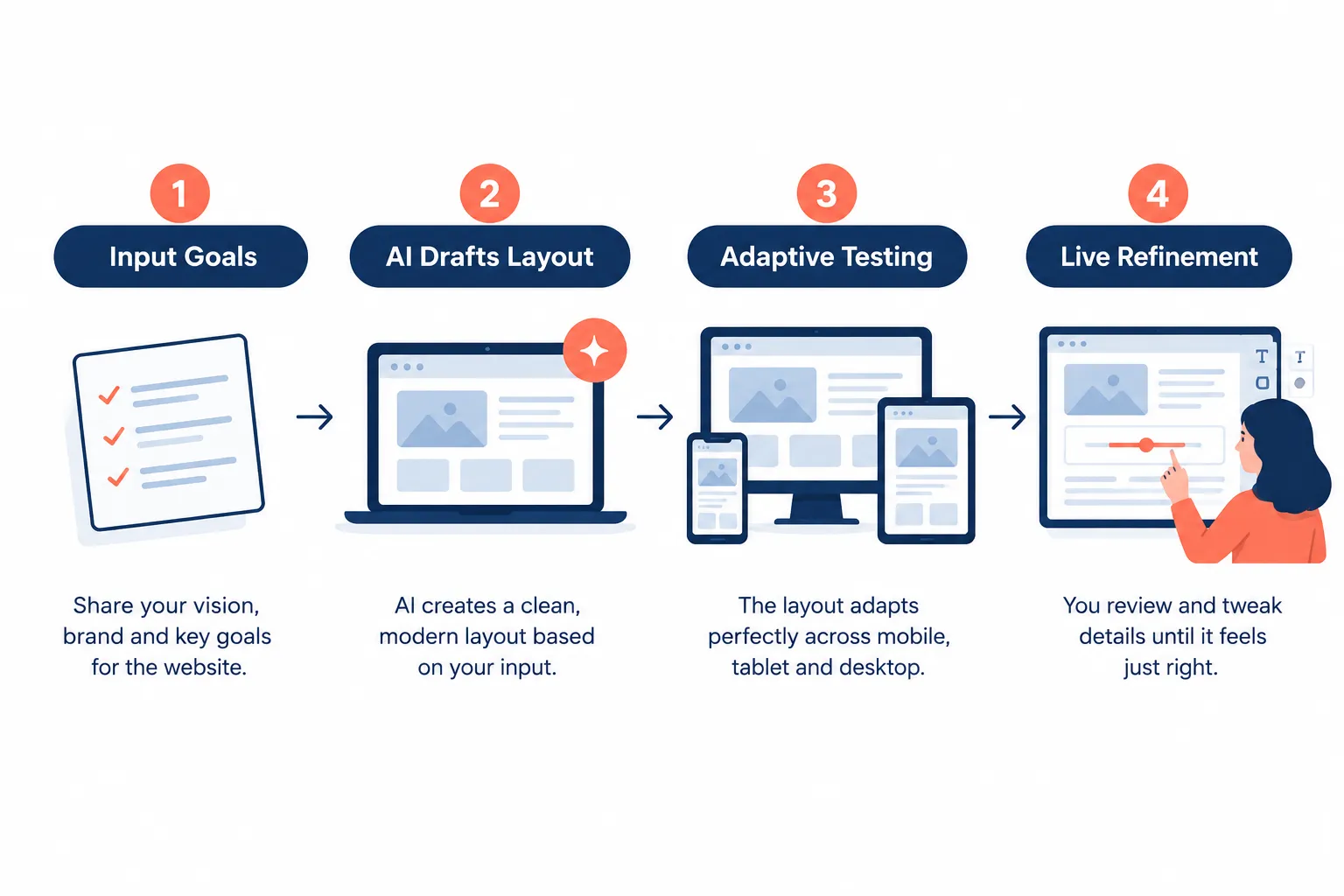
This rapid iteration cycle matters because it removes a lot of the guesswork that used to slow projects down. Instead of debating which button color performs better, teams can run instant A/B tests powered by AI and get answers in days, not weeks.
Here's what a modern AI-assisted design sprint often looks like:
- Brief Input, Business goals and brand info entered into AI platform
- Draft Generation, Multiple layout options created automatically
- User Testing, AI tracks real user interaction patterns
- Live Refinement, Adjustments made instantly based on data
- Launch & Learn, Continuous optimization post-launch
For website owners juggling limited budgets, this speed means lower costs and quicker returns on investment.
What This Means for Different Teams
Business owners: Expect lower costs for custom design work and faster time-to-launch for new sites or campaigns.
Web designers: Your value is shifting from execution speed to creative judgment and brand strategy.
Web developers: AI-generated code still needs human review, clean, scalable, secure code remains your edge.
AI users and marketers: You'll increasingly be the ones "prompting" designs, so understanding design basics becomes a real advantage.
Conclusion: Getting Ready for What's Next
The future of web design is moving fast, and it's leaning heavily on AI to make websites smarter, faster to build, and easier for everyone to use. Adaptive layouts, AI-generated interfaces, better accessibility, and quicker design cycles aren't just trends, they're becoming the new baseline for how good websites get made.
If you're a business owner, now's a smart time to explore AI design tools for your next site refresh. If you're a designer or developer, lean into the strategic and technical skills AI can't replace. And if you're just getting started with AI tools, treat this as the best possible moment to learn, the gap between early adopters and everyone else is widening fast.
Next step: Audit your current website for accessibility and mobile responsiveness this week, then test one AI design tool on a small project to see the difference for yourself.
Tags: future of web design, AI web design, adaptive layouts, user experience, website accessibility, AI generated interfaces, web development trends, design iteration, UX design, responsive design, website personalization, AI design tools